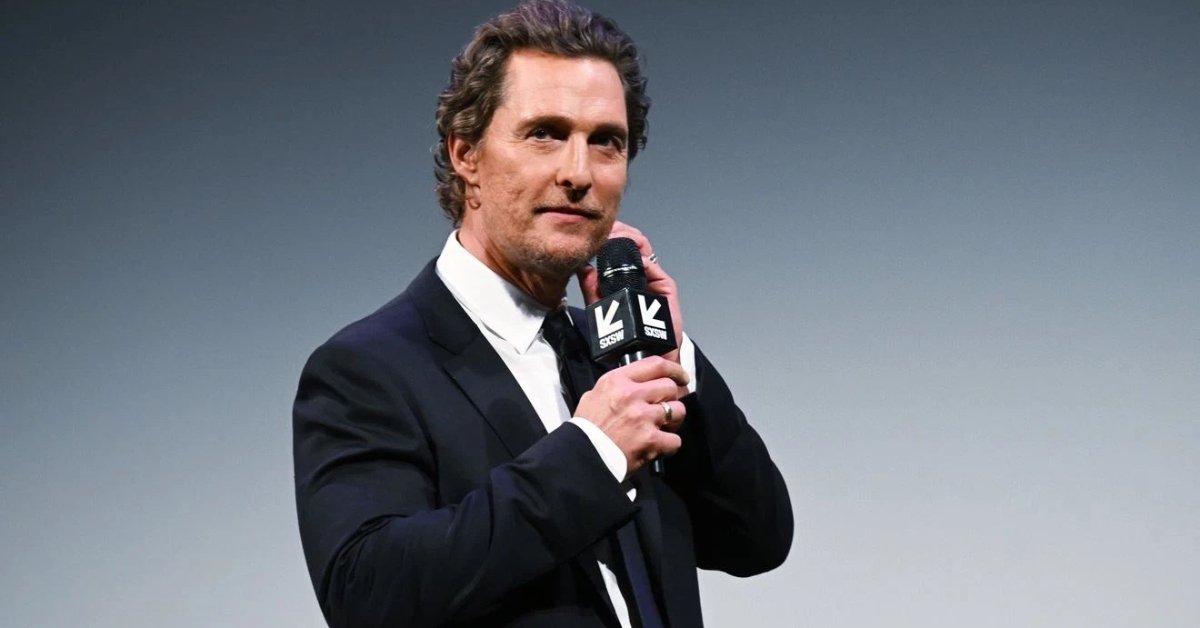
Matthew McConaughey: In the digital age, where people live in a fast-paced environment, a shocking story does not need a long time to gain attention and become viral. One of such claims made recently by Matthew McConaughey left many people puzzled and perplexed.
The narrative indicated that he was broadcast out of his house to expose bombshells that concerned Jeffrey Epstein and some of the prominent personalities. It was melodramatic, sentimental and nearly film-like. And yet there was one trouble with it all, which was that it was not real.
How the Viral Story Started
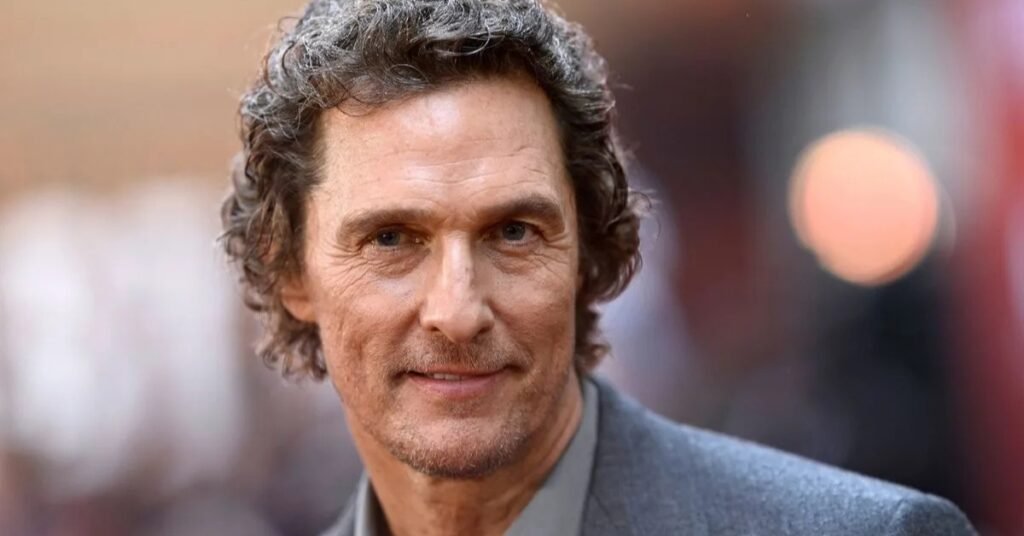
The posts were first shared on platforms such as Facebook, Threads, and Truth Social in March 2026. These were emotional posts that were written boldly and said that McConaughey had presented the unsung truths when mainstream media was supposedly suppressed.
The posts even stated that the video had been viewed by 3.2 billion hours – a figure that can be seen as impressive but which cannot withstand even the most rudimentary examination. There was no livestream of the sort. No video was made, no official confirmation and no reputable reporting.
The Red Flag One: No Relied Voices
Checking reputable news sources is one of the simplest methods of approaching a story to ascertain its truthfulness. In this instance, all the large organisations did not cover anything regarding this alleged livestream.
- None of the international news outlets covered.
- None of the validation by the team of McConaughey.
- No film on his official sources.
- Not a bit of backing anywhere.
The lack of a reliable source of information on a story of this magnitude is a red flag.
Artificial Intelligence Generated Content Under the Hood
A more detailed examination showed something worse still. There were high indicators in the viral text that it was created using artificial intelligence.
Analysis tools revealed that there was a very high likelihood that the content was a machine-written work. Unnatural even without equipment, the very writing was too dramatic and heavy-handed, too full of hyperbolic assertions. The blog posts that were used as sources in these articles were of a similar format:
- Text was installed as pictures to escape being detected.
- Very expressive and indistinct phrasing.
- Prolonged, melodramatic epilogues in which there is not much.
This is one of the tricks of a misinformation campaign.
Distorted images were added to the illusion
The images that are attached to these posts also provoked concerns. There were numerous images depicting minimal facial and feature distortions, a characteristic feature of AI-generated or edited images.
The images were accompanied by figures of the society that were related to the fake story, and this is what makes the story seem more realistic on a surface level. Yet, in the real sense, they belonged to the same fictitious ecosystem.
Hacking a Social Media Page: Its Purpose
The viral message was not posted by an official or other credible celebrity. Rather, it was linked to a hacked Facebook account of a fitness coach.
It was obviously a hijacked page. Signs of this included:
- The abrupt change in the style of content.
- Various anonymous administrators.
- Posts that refer to suspicious sites.
- Constant application of sensational headlines.
After hijacking, the page was then used to promote several stories that were generated by AI, all of which were meant to be clicked on.
The Reason why such stories are so viral
It is not a coincidence that such fake stories can succeed. They are well structured in order to cause emotional responses.
They tend to have a pattern that is used:
- A well-known celebrity
- A hidden truth or conspiracy
- Opposed by muted information.
- Unrealistic and huge view counts.
This equation exploits the curiosity and the need to know of people, most of the time when there are sensitive issues involved.
A Trend of Celebrity Targeting

This is not the first occasion on which Matthew McConaughey was employed in misleading stories. The AI-generated claims have not been new, as similar announcements have been surfacing in the past, attaching his name to controversial or emotive areas.
Celebrities tend to be the victims of the fact that:
- They are immediately attention-grabbing.
- Their names make it credible.
- Their fan base assists them in propagating content.
However, this is also bad because it makes them easy instruments of misinformation campaigns.
The Truthful Intention of the Viral Post
In the centre of this situation lies one basic objective: traffic and revenue.
These are artificial accounts that are meant to push the user to websites that are ad-intensive. Every click makes money for the organisers of the operation.
That is, it is only a bait in the emotional story
The more the clicks, the more the ad revenue. Viral marketing expands its reach. Sensational material maintains interest in the users. It is a company philosophy based on falsehoods.
Why It Matters More Than Ever
Although this specific story might be innocent to others, it brings out a bigger problem. Misinformation made by AI is getting better and more difficult to identify.
It can:
- Mislead millions of people
- Damage reputations
- Spread false narratives
- Lessen the confidence in facts.
The initial step in the avoidance of these stories is to understand their functioning.
Frequently Asked Questions (FAQs)
Q1. Did Matthew McConaughey livestream about Epstein?
No, it is a totally false statement. There was no livestream of such.
Q2. Where did the story come from?
This has arisen because of a hacked social media page and has been spread with the use of AI-generated content.
Q3. Were these pictures in the posting real?
Most of the photos were of AI manipulations and not genuine.
Q4. And how come people believe such stories?
They are meant to be emotional and persuasive, and mostly incorporate famous figures.
Q5. What will you do in the case you encounter such posts?
Check the facts with some reliable sources before accepting and spreading them.
Disclaimer: The given article is aimed at being informational and awareness-based. It underlines the fake news and does not facilitate or encourage fake news. Before making conclusions and posting content online, the readers are advised to confirm news using reliable and credible news sources.
Also Read:
Lauren Daigle “You Lead Me” Release + SiriusXM Music Box Channel Details 2026
20 Basic Car Interior Parts Name with Functions and Pictures
How Many Companies Does Volkswagen Own, Full List of Volkswagen Group Brands